

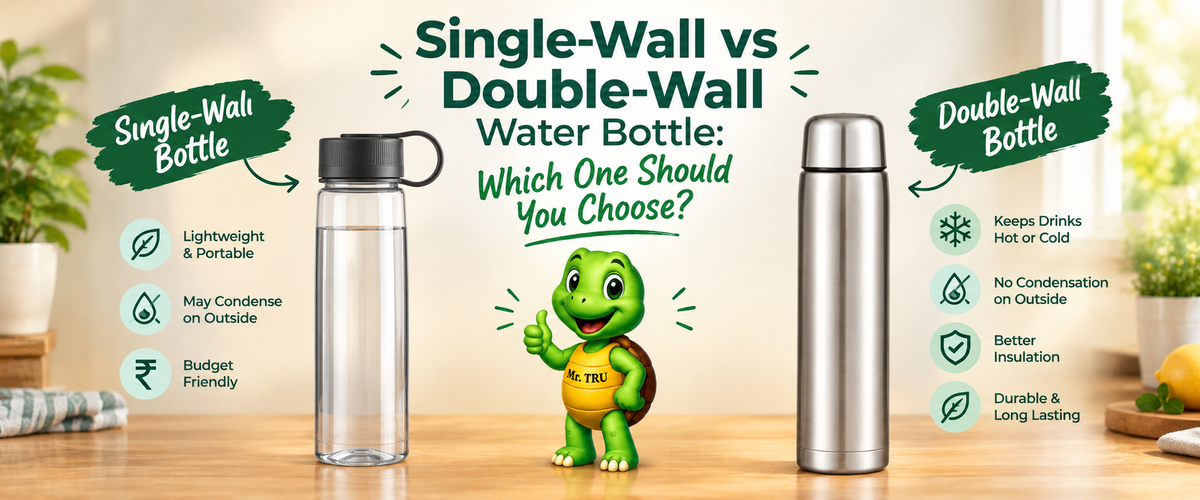
You pack ice water for a morning hike. By noon, it is lukewarm, and your backpack is soaked. That is the single-wall bottle experience. The difference between single-wall and double-wall water bottles comes down to thermal transfer. A single-wall bottle has one layer of material, making it lighter and less expensive, but it doesn't retain temperature. A double-wall bottle features a vacuum-sealed gap between two layers, keeping drinks cold or hot for hours, though it is heavier and pricier.
What is the difference between a single-wall and a double-wall bottle?
The core difference is structural. A single-wall water bottle consists of one layer of material, typically stainless steel or a polymer, offering no temperature retention. A double-wall bottle features two layers with a vacuum-sealed gap between them, acting as a thermal barrier to keep liquids hot or cold for extended periods. Single-wall options prioritize carrying efficiency, while double-wall options prioritize temperature management.
The mechanics of single-wall construction
Single-wall bottles are exactly what they sound like: one barrier between your drink and the outside world. According to a water bottle industry review by Jiyue Industrial, this simple design makes the bottle highly cost-effective to produce and gives it a minimalistic, lightweight profile.
Because there is only one thin layer of metal or plastic, the bottle transmits temperature almost instantly. Ice water makes the exterior freezing cold. Hot coffee makes the exterior dangerously hot to the touch. The trade-off for this lack of insulation is maximum usable volume. Golmate, a bottle manufacturing analysis platform, notes that single-wall bottles often hold more liquid than a double-wall bottle of the exact same outer dimensions, because there is no insulated gap eating up internal space.
How double-wall vacuum insulation works
Double-wall construction adds a second layer of steel, creating a narrow gap between the inner and outer walls. Manufacturers suck the air out of this gap, creating a vacuum.
According to the thermal engineering principles outlined by Golmate, a vacuum removes the physical medium that heat travels through. Without air molecules to carry thermal energy, the inside liquid is effectively isolated from the outside air. The outer wall stays at room temperature, while the inner wall maintains the liquid's temperature. According to Mizu Life, a manufacturer of stainless steel bottles, this vacuum insulation keeps cold liquids chilled for up to 24 hours and hot liquids warm for up to 12 hours.
What does an insulated water bottle mean?
An insulated water bottle uses a double-wall barrier to prevent thermal transfer. The vacuum gap stops heat from entering or escaping the container, keeping cold drinks cold and hot drinks hot. This construction also prevents exterior condensation, keeping your hands and bag dry regardless of the liquid temperature inside.
Thermal barrier properties
The vacuum in an insulated bottle acts as a literal wall against heat transfer. When you pour boiling water into a single-wall steel bottle, the heat transfers immediately to the outside, making it too hot to hold. A vacuum-insulated bottle prevents this rapid thermal equilibrium. The inner wall holds the heat, while the vacuum gap stops it from reaching the outer wall. This barrier works both ways. According to the Jiyue Industrial review, hot drinks stay hot for several hours, and cold drinks remain cold for even longer because the outside environment cannot easily bleed its thermal energy into the bottle.
Preventing external condensation
Condensation is the annoying side effect of a cold drink on a humid day. When warm air hits a cold, single-wall bottle, the air cools down rapidly. The water vapor in the air condenses and turns into liquid beads on the outside of the bottle.
According to Mizu Life, this is why single-wall bottles "sweat" and leave water rings on your desk. A double-wall insulated bottle prevents this entirely. Because the vacuum barrier stops the cold liquid from cooling the outer steel, the outside of the bottle remains at room temperature. The warm air never meets a cold surface, so condensation never forms. Your bag stays dry, and your grip remains secure.
Should you choose a single wall or insulated bottle for daily use?
For daily use, an insulated bottle is usually the better choice. It handles temperature extremes safely, prevents condensation on your desk, and keeps your coffee hot for hours. A single-wall bottle works well if you only drink room-temperature water, prioritize a lightweight carry, or want maximum volume for a long hike.
Office and gym environments
In an office, an insulated bottle is the clear winner. You want hot coffee at 2 PM without microwaving it. You want ice water that does not leave a puddle on your wooden desk. Double-wall construction handles both easily.
At the gym, you might prefer a single-wall bottle. If you drain a liter of water in a 45-minute session, temperature retention does not matter. A single-wall bottle is lighter to carry on the treadmill and takes up less weight in your bag. If you want a reliable option for both environments, you can browse the TruTRTL collection of stainless steel bottles to match your specific routine.
Outdoor sports and hiking scenarios
Weight is the ultimate currency on a hiking trail. Ounces add up to pounds. According to Golmate's comparative analysis, single-wall bottles are usually lighter for a similar capacity because they lack the second wall and base structure. If you are backpacking and drinking from streams or carrying water that matches the outside temperature, single-wall is the practical choice.
For day hikes in the summer sun, an insulated bottle is worth the extra weight. Warm, plastic-tasting water at the summit ruins the view. A double-wall bottle keeps your water icy cold from the trailhead to the car.
How do single wall vs double wall steel bottles compare in weight and cost?
Single-wall steel bottles are lighter and cheaper because they use less material and require simpler manufacturing. Double-wall steel bottles cost more and weigh more due to the complex process of sealing a vacuum between two steel layers. You pay a premium for temperature retention and condensation control.
Material thickness and portability
A single-wall bottle uses one sheet of stainless steel. A double-wall bottle uses two. The math is simple. According to Mizu Life, single-wall bottles are much lighter and easier to carry than their insulated counterparts because they have only one wall of steel.
Golmate notes that this weight difference matters most when you are carrying multiple bottles or trying to fit a bottle into a tight bag compartment. Single-wall bottles are slimmer for their capacity, making them easier to slide into a crowded backpack.
Manufacturing complexity and price points
Creating a vacuum-sealed double-wall bottle is complex. The manufacturer has to weld two steel walls together, heat the bottle to expand the remaining air, and seal it so a vacuum forms as it cools. This drives up the price.
Single-wall bottles are stamped, rolled, and finished. The Jiyue Industrial review points out that this straightforward design makes single-wall bottles more cost-effective to produce, which translates into a lower retail price. If you need to buy kitchen appliances and accessories online at the best price in India, single-wall bottles offer the most hydration capacity per rupee.
Which is the best type of water bottle for temperature retention?
A double-wall vacuum-insulated bottle is the best type for temperature retention. The vacuum gap stops thermal transfer, keeping drinks cold for up to 24 hours and hot for up to 12 hours. Single-wall bottles offer almost zero temperature retention, matching the liquid to the outside air within an hour or two.
Performance with iced beverages
Ice melts fast in a single-wall bottle. The heat from the room transfers straight through the steel, attacking the ice from all sides. According to the Jiyue Industrial review, ice-cold water in a single-wall bottle will become lukewarm quickly as the ice melts.
A double-wall bottle isolates the ice. The vacuum keeps the heat out, so the ice stays frozen for hours. According to Mizu Life, packing an insulated bottle with cold liquid at camp before a hike ensures you return to an icy drink.
Safety with hot liquids
Never put boiling water in a cheap single-wall plastic bottle. Even with single-wall steel, pouring boiling water makes the exterior too hot to touch safely. The Jiyue Industrial review warns that single-wall bottles offer very limited protection against external factors like temperature changes.
Double-wall bottles keep the heat inside. You can pour boiling coffee into a vacuum-insulated bottle, and the outer wall stays cool enough to hold. This makes double-wall bottles the only safe choice for commuting with hot liquids.
How do you maintain and clean single-wall and double-wall bottles?
Both bottle types require regular cleaning, but double-wall bottles need more careful maintenance to protect the vacuum seal. Hand washing is recommended for insulated bottles to prevent water from breaching the seal, while single-wall bottles can often handle rougher cleaning and occasional dishwasher use.
Hand washing vs dishwasher safety
Single-wall stainless steel is tough. You can throw it in a dishwasher, use abrasive sponges, and scrub hard. There is no internal structure to damage.
Double-wall bottles require more finesse. High water pressure in a dishwasher can sometimes compromise the seal at the base of the bottle, breaking the vacuum and ruining the insulation. Hand washing with warm, soapy water is the best practice.
Protecting the vacuum seal
The vacuum seal is the lifeblood of a double-wall bottle. If the seal breaks, the bottle becomes a heavy, poorly performing single-wall bottle. Avoid dropping a double-wall bottle on hard surfaces, as a severe dent can pierce the inner or outer wall, breaking the vacuum. According to the Jiyue Industrial review, the outer layer of a double-wall bottle acts as a shield, but extreme impacts can still cause structural failure.
If your bottle ever stops holding temperature and feels unusually hot or cold on the outside, the vacuum is broken. If you experience this with a TruTRTL product, you can reach out to the TruTRTL support team for warranty assistance.
Choosing the right bottle means matching the gear to your day. If you want a lightweight, high-capacity container for short trips and room-temperature water, pick a single-wall bottle. If you need to keep your coffee hot for hours or want ice water without a sweaty desk, a double-wall vacuum-insulated bottle is the only way to go. You can see what the TruTRTL team is testing next on the TruTRTL YouTube channel, or share your daily hydration setup with us on Facebook and Instagram.
Key Takeaways
- Single-wall bottles are lighter and cheaper but lack insulation, causing them to sweat and match outside temperatures quickly.
- Double-wall bottles use a vacuum-sealed gap to keep drinks cold for 24 hours and hot for 12 hours without condensation.
- Choose a single-wall bottle for short gym sessions or hiking where weight matters most.
- Opt for a double-wall bottle for office use, commuting with hot liquids, or all-day hydration.
Comparison
|
Feature |
Single-Wall Bottle |
Double-Wall Bottle |
|
Insulation |
None |
Vacuum-sealed gap |
|
Temperature Retention |
Minimal |
Cold up to 24h, Hot up to 12h |
|
Weight |
Lighter |
Heavier |
|
Condensation |
Sweats easily |
Prevents condensation |
|
Cost |
More affordable |
Pricier premium |
Frequently Asked Questions
What does an insulated water bottle mean?
An insulated water bottle uses a double-wall barrier with a vacuum-sealed gap to prevent thermal transfer. This stops heat from entering or escaping, keeping cold drinks chilled and hot drinks warm for hours. It also prevents exterior condensation, ensuring your hands and bag stay completely dry.
Which is the best type of water bottle for everyday use?
For everyday use, an insulated bottle is usually the best choice. It handles temperature extremes safely, prevents condensation on your desk, and keeps beverages hot or cold for hours. A single-wall bottle works well if you prioritize a lightweight carry or only drink room-temperature water during short trips.
Can you put hot liquids in a single-wall steel bottle?
You can put hot liquids in a single-wall steel bottle, but it is not safe to hold. The single layer of steel transfers heat instantly, making the exterior dangerously hot to the touch. Double-wall vacuum-insulated bottles keep the heat inside, ensuring the outer wall remains cool and safe for commuting.
Why does my single-wall water bottle sweat?
A single-wall water bottle sweats because it lacks insulation. When warm air hits the cold steel exterior, the air cools rapidly and water vapor condenses into liquid beads on the surface. Double-wall bottles prevent this by keeping the outer wall at room temperature, eliminating condensation entirely.
Is a double-wall bottle worth the extra cost?
A double-wall bottle is worth the extra cost if you need temperature retention or want to avoid condensation. The complex manufacturing process of sealing a vacuum makes them pricier, but they keep drinks cold for up to 24 hours and hot for up to 12 hours, offering superior daily performance compared to single-wall alternatives.

Share:
Vegetable Chopper vs Food Processor: Which One Is Better for Your Kitchen?